
“It’s not what you take when you leave this world behind you… It’s what you leave behind you when you go.” – Randy Travis, Three Wooden Crosses
I am a history buff. I was initially accepted to college as a history major and entered with most of my history requirements fulfilled through advanced placement credits. In the late 90s, there was no future outside of teaching history, so I believed it when I was told that computer programming was where it’s at. I failed out of computer science in a magnificent fashion, and it wasn’t fully for lack of competence but for a complete lack of interest. I fell back on another interest and settled on the visual side of computers in digital media arts. Even when I compromised and settled on digital media, I took 15 hours of art history, one course short of a Minor.
My oldest son shares my love of history. I never worry about him acing those courses. He loves to come home and retell the stories of the past he learned about in school. Quite often, he has conversations with the Amazon Alexa speaker to bolster the knowledge he gained that day and to answer any questions that may arise. Like his father’s indifference to programming, he would do well to power through the rest.
One of my hobbies is genealogy. I love to comb through the annals of history and consider the exact paths taken that brought me here today. If I could take a time machine and meet an ancestor at their place in time, is there a debt I could repay? Could I help them patch a roof? Milk a cow? Repel invaders?
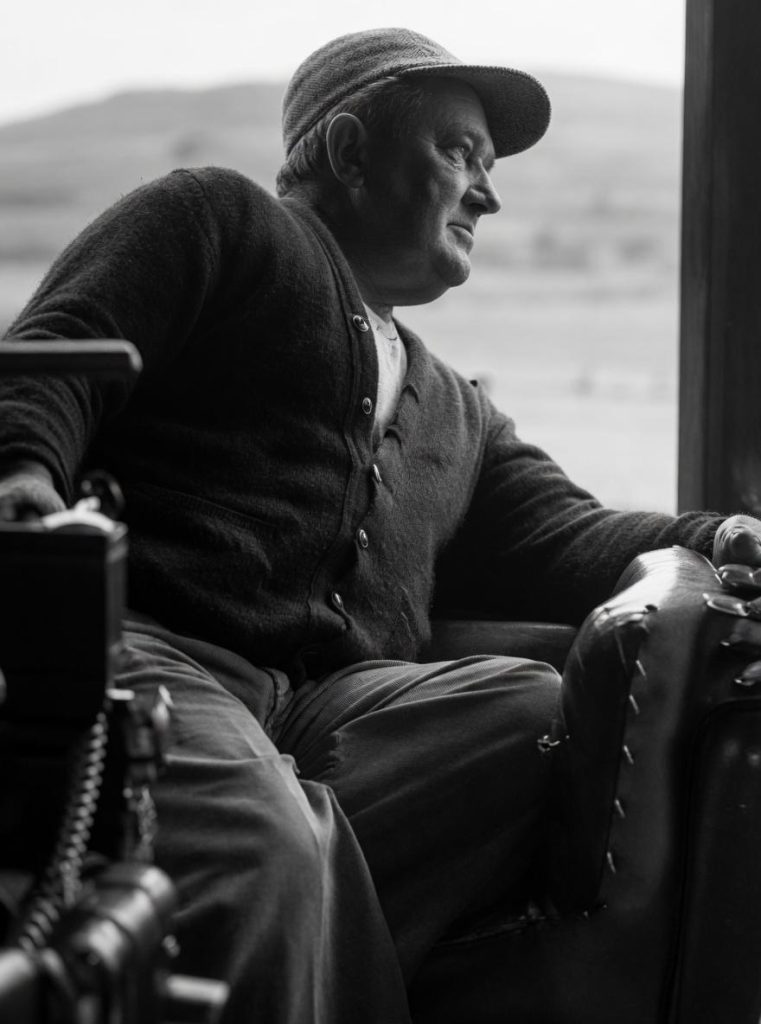
In the Spring of 2019, I took my sons to visit my father on the family farm in northeast Pennsylvania on the New York state line. His mother and stepfather ran a family dairy for the better part of a half-century. That side of the family never wandered far from our American roots. Those who didn’t farm worked for the railroad. That is one piece of me that feels at home here in Pocatello on the Pacific side of the Union Pacific.
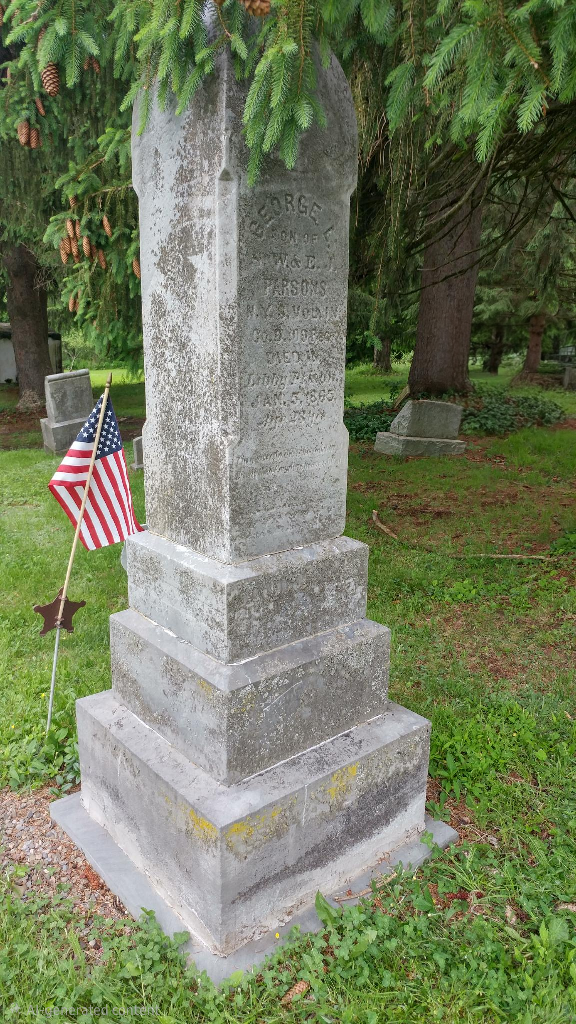
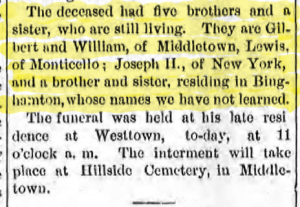
Until recently, my work in genealogy had stalled in Hawleyton, New York, around 1815. This is the final resting place of my 4th great-grandfather, Samuel “Webb”, and his son, George. George is the only direct Parsons that I have found to have died in the service of the nation. He fought with the NY 109th regiment in the Civil War and was likely captured during the Battle of Spotsylvania Court House in Virginia. He died of disease in Libby Prison in Richmond, a mere three months before the end of the war in April of 1865. Since they were buried only twenty minutes from the family farm, we took a short trip to pay our respects.
More recently, I was able to close the loop on the family tree when I noticed that the death certificate for one of Webb’s children listed his birthplace as Orange, New York, though it didn’t list his father’s name. Starting from the Parsons origins in Massachusetts and Connecticut and working forward, there were only a few possible links in Orange, New York, listed in the 1810-1820 census data around the time of his birth. The most likely connection I made, based on childbearing age, naming conventions, and location, was a William Lewis Parsons. The one stumbling block I ran into was that William already had a son, Ira, born in 1814, the same year as Webb.
When William was born, his father, my sixth-great-grandfather, Sergeant Samuel Lewis Parsons, was stationed at West Point under his cousin, Major General Samuel Holden Parsons. General Parsons was an instrumental figure in the Revolutionary War and notably recommended establishing the Continental Congress to declare and wage war against the British. He also wrote to General Washington, warning of Benedict Arnold’s betrayal, though unfortunately too late.
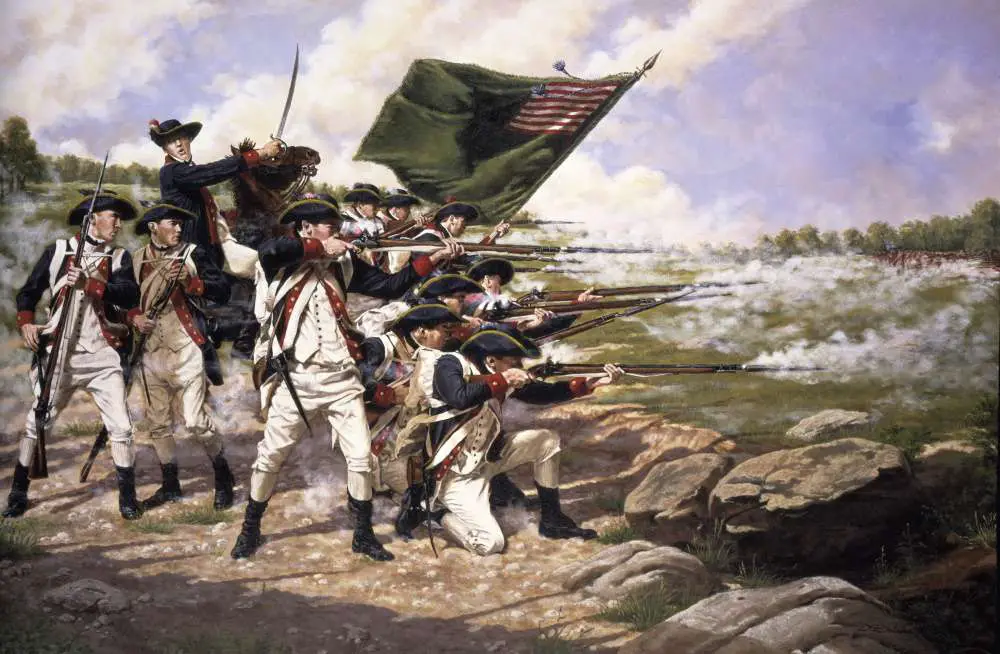
In 2023, I lost five of my six grandparents (my mother was adopted). The most accomplished of those grandparents could never mean as much to my kids as they did to me, and so how much less could they mean to a world that continues in their absence? We are all two generations away from being forgotten in time. This never hit harder than when I was sifting through my grandfather’s garage after his passing. All of his earthly possessions that weren’t sentimental were donated or thrown away. In this life, it’s not those things that we acquire or consume that last, but that which we produce.
If you haven’t dabbled in genealogy, it is a uniquely satisfying science and art. Just as a psychotherapist will attempt to coax formative experiences from your past to explain your current state, genealogy can piece together your origins to discover unknown parts of yourself. There are a host of free and paid online genealogy services available to you. Why not give it a go?
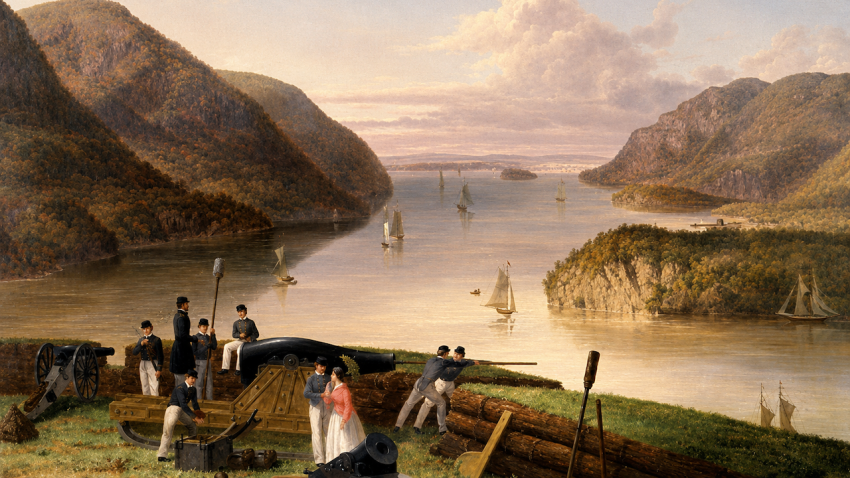
Painting West Point, New York by Seth Eastman, 1875

- The “A” Word - August 30, 2026
- A Letter To The Church In Idaho - July 13, 2026
- Brushfires In The Minds Of Men - June 29, 2026